Claude vs Gemini (2026): Focused Depth vs Google-Wide Reach
Claude and Gemini are the two most interesting AI assistants to compare, because they're barely trying to be the same thing. Claude is a focused, text-and-code specialist with a privacy-forward, do-fewer-things-exceptionally-well philosophy. Gemini is Google's everywhere-at-once play — woven into Search, Gmail, Docs, Android, and YouTube, with the most generous free tier in the category. They overlap on price but almost nowhere on philosophy.
The one-line answer: Pick Claude if your work is serious coding, writing, or reasoning over long documents and you want the best output quality. Pick Gemini if you live inside Google's apps, want a free tier that may never make you pay, or need video generation and huge bundled storage.
At a glance
| Claude | Gemini | |
|---|---|---|
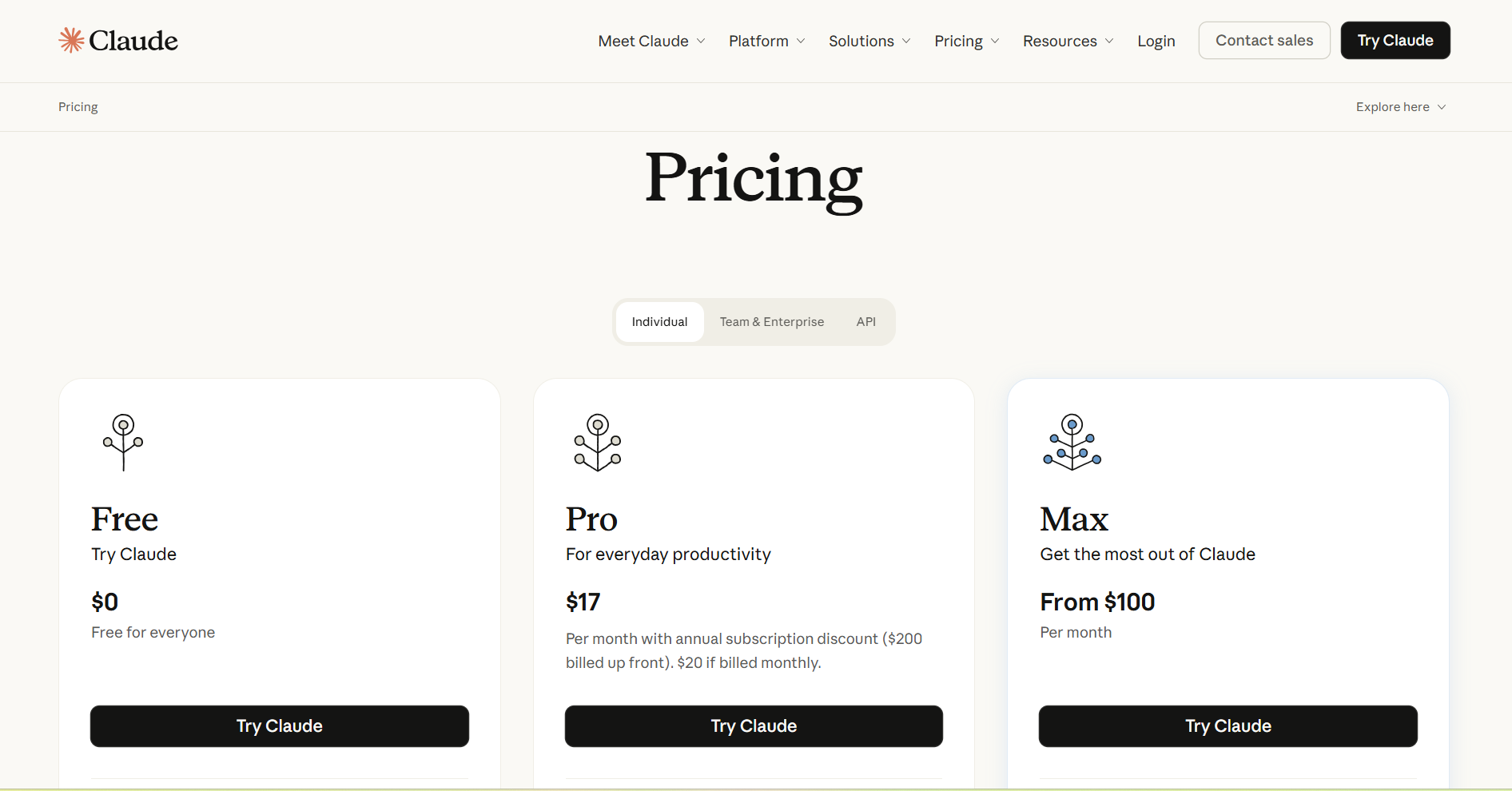
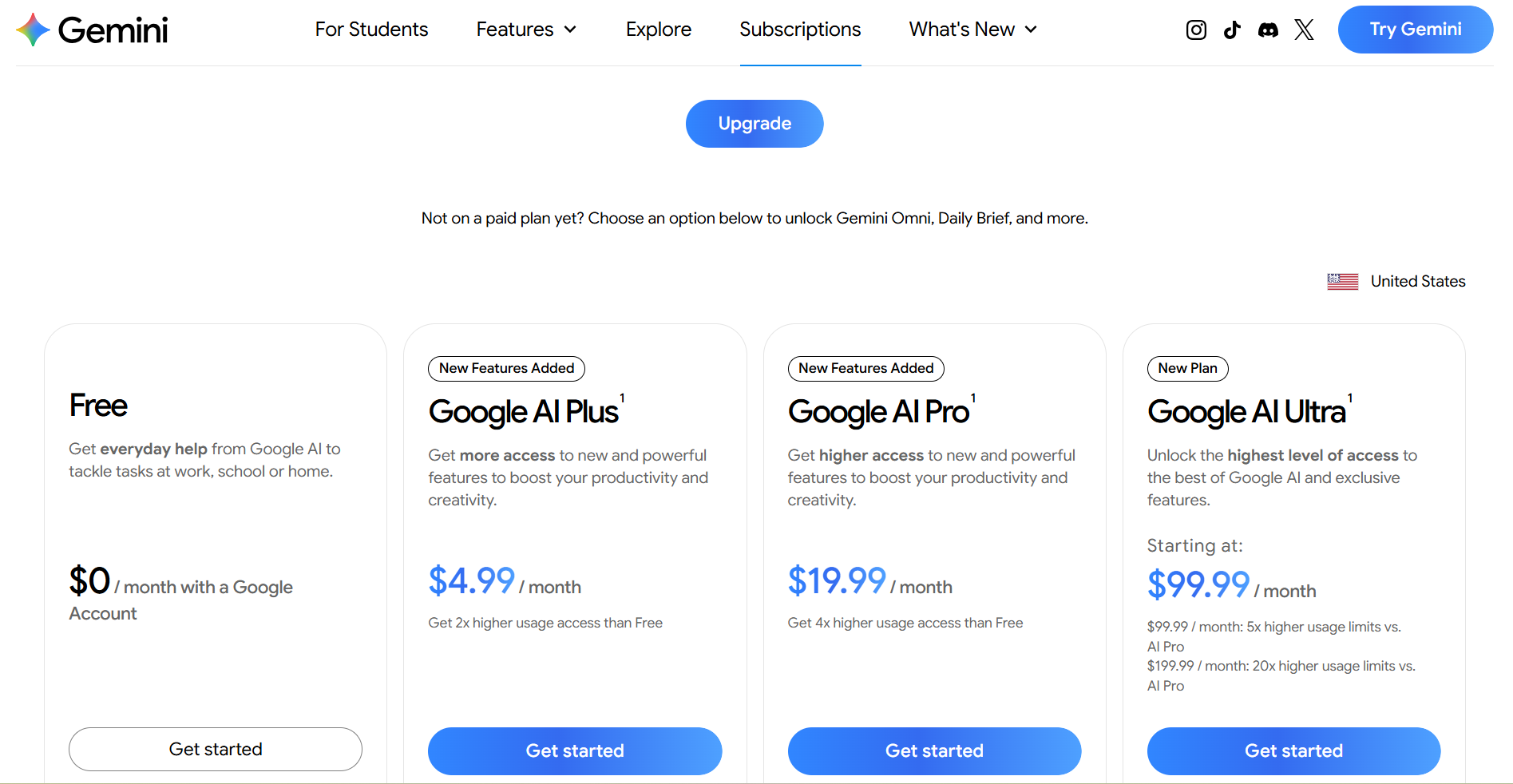
| Entry price | $17/mo annual ($20 monthly), Pro | $19.99/mo (Google AI Pro) |
| Cheapest paid tier | None below Pro ($17–20) | AI Plus $4.99 |
| Free tier | Sonnet 4.6, ad-free | Gemini 3.5 Flash, very generous |
| Flagship model | Claude Opus 4.8 | Gemini 3.1 Pro |
| Top tier | Max $100 / $200 | AI Ultra $99.99 / $199.99 |
| Context window | 200K chat / 1M API | 1M (in app at Pro) |
| Image generation | No | Yes (Nano Banana) |
| Video generation | No | Yes (Veo 3.1) |
| Ecosystem | MCP (6,000+), Projects, Claude Code | Search, Gmail, Docs, Android, YouTube |
| Best at | Coding, writing quality, deep reasoning | Google integration, free tier, multimodal, context |
Pricing: close at the entry, very different shapes
Claude Pro is $17/month on annual billing ($20 monthly), and notably includes Claude Code — the terminal coding agent — plus Claude Cowork and Research. Above Pro, Max runs $100 (5x) and $200 (20x). The free tier is ad-free and runs Sonnet 4.6.
Google AI Pro is $19.99/month and bundles far more around the assistant: Gemini in Gmail and Docs, 5TB of Google One storage, Veo video, NotebookLM upgrades, and YouTube Premium. There's a cheaper AI Plus at $4.99, and after I/O 2026, AI Ultra starts at $99.99 (down from $249.99), with a $199.99 top tier.
Verdict: Roughly matched at the ~$20 assistant tier. Claude packs more developer value into Pro (Claude Code at $17–20 is a serious perk). Gemini packs more consumer value (storage, YouTube, Google-app integration) and has both a cheaper entry tier and — at the high end — a cheaper top tier than most rivals. Choose by which kind of value you'll actually use.
Coding: Claude leads, but Gemini's context is a real draw
For serious coding, Claude is the stronger model. It leads on hard real-world coding benchmarks (SWE-bench Pro), is the default model in Cursor (the most popular AI code editor), and includes Claude Code — a terminal agent that reads your whole repo, edits files, and runs commands locally — right in the $17–20 Pro tier. Developers consistently rate Claude's code as cleaner and its explanations clearer.
Gemini's counter is reach and context. Gemini 3.5 Flash is fast and strong on agentic/coding tasks at low cost, and Gemini offers a 1M-token context window in the app — useful for reasoning across a large codebase in one pass (it advertises handling ~30k lines of code in a single prompt). Plus the Jules async coding agent and tight Google Cloud ties.
Verdict: Claude for output quality and the included terminal agent — the better choice if coding is your main job. Gemini if you need massive in-app context, want fast cheap iteration, or already build on Google Cloud.
Writing: Claude's clearest strength
This is where Claude pulls ahead most clearly. The consensus among writers is that Claude produces the most natural prose of any major model — varied sentence rhythm, smooth transitions, accurate tone-matching — where other models can read as competent-but-formulaic. For essays, narrative, long-form, or anything where voice matters, Claude's drafts need the least de-roboting.
Gemini writes capably and has a genuine edge for research-driven writing: Deep Research can analyze hundreds of sources into a report, and it pulls live Google data and integrates directly into Docs. So for fact-heavy, source-backed, or Docs-native writing, Gemini's workflow is strong.
Verdict: Claude for prose quality and voice. Gemini for research-backed writing and anything you're drafting inside Google Docs.
Where Gemini wins outright: multimodal and ecosystem
Two big categories go to Gemini by default, because Claude doesn't compete in them at all.
Multimodal generation. Claude is text-only — no image or video generation. Gemini generates both (Nano Banana for images, Veo 3.1 for video, with Veo widely considered best-in-class), plus the new Gemini Omni for conversational video creation. If your work touches visual or video content, that's a hard differentiator.
Ambient ecosystem. Gemini is inside the Google products you already use — Gmail drafts replies, Docs writes alongside you, Search powers AI overviews, Android uses it as the assistant. Claude's ecosystem is real but different in kind: MCP connects it to 6,000+ apps for agentic workflows, and Projects give you persistent workspaces — powerful for developers and power users, but not the "it's already everywhere you work" reach Gemini has inside Google.
Verdict: Gemini wins multimodal outright (Claude doesn't play there) and wins ambient integration if your day runs on Google apps. Claude's ecosystem strength is agentic/developer integrations via MCP, not consumer reach.
Reasoning and long context
Both are strong here with different shapes. Claude leads on graduate-level reasoning (GPQA Diamond) and is known for reliable long-context handling — minimal accuracy loss across a fully loaded window, which matters for one-pass analysis of big documents or codebases. Gemini offers a 1M-token window in-app and is fast, making it excellent for sheer volume — drop in up to ~1,500 pages of documents and have it synthesize.
Verdict: Claude for the hardest reasoning and reliable deep analysis; Gemini for raw context volume and speed, especially in-app.
Privacy and posture
Worth a note since the two companies differ in DNA. Claude comes from Anthropic's safety-first roots and takes a privacy-forward stance (ad-free, no training on your content by default on paid Team/Enterprise tiers). Gemini lives in Google's ad-funded ecosystem; the trade is convenience and free generosity in exchange for being inside Google's data world. Neither is "right" — it depends on what you value.
Who should pick which
Choose Claude if you:
- Code seriously (best output quality, Claude Code included at $17–20)
- Care about natural, human-sounding writing
- Want reliable reasoning over long documents
- Prefer an ad-free, privacy-forward tool
- Want a focused assistant that does fewer things exceptionally well
Choose Gemini if you:
- Live in Gmail, Docs, Drive, or Android (ambient AI everywhere)
- Want the most generous free tier in 2026
- Need image or video generation (Claude has neither)
- Want huge bundled storage, YouTube Premium, and Google-app integration
- Need massive in-app context or fast, cheap iteration
The honest bottom line
This is the clearest "depth vs reach" choice in AI. Claude is depth — the best model for code and writing quality, focused and privacy-forward, the specialist's tool. Gemini is reach — everywhere you already work in Google, multimodal, with a free tier so good many users never pay.
If your work is serious text and code and you care about output quality, Claude is the stronger pick — and Claude Code in the $17–20 tier is a genuine bargain for developers. If your day runs on Google, you want images and video, or you just want an excellent assistant for free, Gemini is hard to beat. They overlap little enough that some people use both: Claude for the deep work, Gemini for the Google-native, multimodal, everyday tasks.
Frequently asked questions
Is Claude or Gemini cheaper? Close at the main tier — Claude Pro is $17/mo annual ($20 monthly), Google AI Pro is $19.99. Gemini has a cheaper entry tier (AI Plus $4.99) and a cheaper top tier (AI Ultra $99.99 vs Claude Max $100/$200 is similar). Gemini's free tier is more generous.
Which is better for coding? Claude, for output quality — it leads hard coding benchmarks, is Cursor's default model, and includes Claude Code at $17–20. Gemini's edge is a larger in-app context window and fast, cheap iteration.
Can Claude generate images or video? No. Claude is text-only. Gemini generates both images (Nano Banana) and video (Veo 3.1). If you need visual or video output, that alone may decide it.
Which has the better free tier? Gemini, clearly — its free tier runs Gemini 3.5 Flash with Deep Research and is generous enough that many never upgrade. Claude's free tier (Sonnet 4.6) is solid and ad-free but more limited.
Does Gemini work inside Gmail and Docs? Yes — that's its biggest advantage. Gemini is built into Gmail, Docs, Drive, Search, and Android. Claude integrates via MCP, Microsoft 365, and connectors, but isn't woven into Google's apps.
Should I use both? Many people do, because they overlap so little — Claude for deep coding and writing, Gemini for Google-native tasks, multimodal generation, and quick everyday help.
Related on Toolglade:* Best AI Chatbots · ChatGPT vs Claude · ChatGPT vs Gemini · Claude review · Gemini review